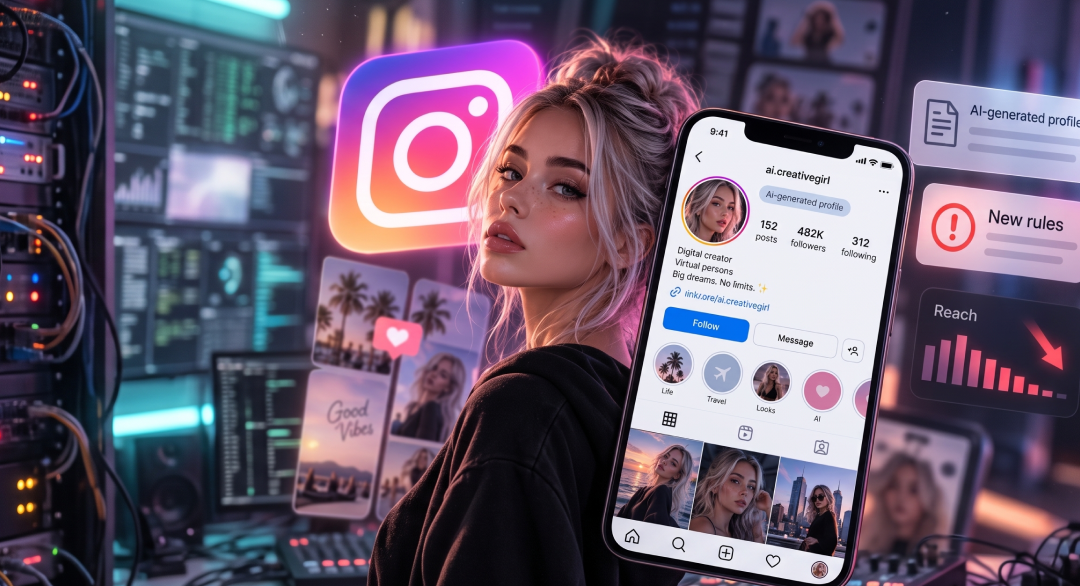
AI Profiles on Instagram. New Rules and Reach Restrictions
Published: 19.09.2026
AI profiles on Instagram will be subject to new labeling rules. If an account is built around a person created using AI but does not have the appropriate label, Instagram may limit its reach among users who do not follow the account.
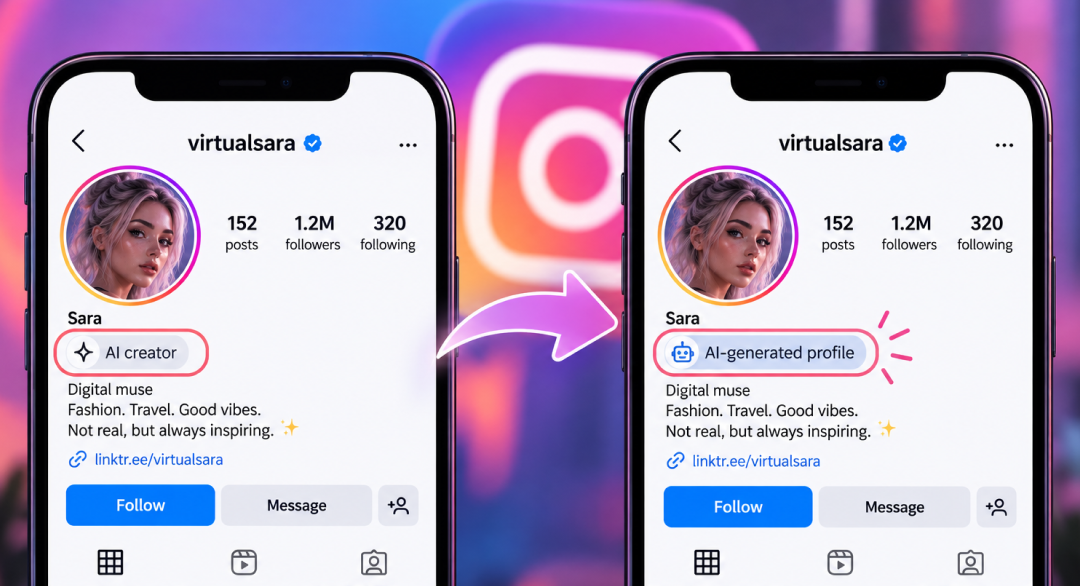
If an account features a person who does not actually exist, this will need to be clearly disclosed. The platform is also changing the name of the label. Instead of “AI creator,” Instagram will introduce a clearer “AI-generated profile” label.
This change is particularly noteworthy given the growing use of virtual influencers and AI creators to promote products and services. Properly labeling such accounts may now affect not only audience trust but also their organic reach.
New Rules for AI Profiles on Instagram
The main goal of the update is to help users distinguish real creators from AI-generated characters. According to the developers, the previous “AI creator” label was not entirely clear. It could be interpreted as referring to a real person who simply uses AI to create content.
That is why Instagram is switching to the more specific “AI-generated profile” label. It will indicate that the person featured in the profile was created entirely or largely using AI.
Instagram is not banning virtual influencers or AI-generated characters. Such profiles can continue to operate, publish content, and appear in recommendations. The main requirement is to label them correctly and comply with the platform’s other rules.
What Happens to AI Profiles on Instagram Without a Label
If Instagram determines that a profile is built around an AI-generated person but the account owner has not disclosed this, the platform may limit its reach. This primarily applies to recommendations shown to users who do not yet follow the profile.
The content may appear less frequently or may not appear at all in Reels, Explore, and other recommendation sections. However, the account itself will not necessarily be blocked or removed. Followers will still be able to see its content, but its ability to organically attract new audiences may be significantly reduced.
For profiles used for affiliate marketing, this could directly affect traffic volumes, clicks, and, consequently, conversions.
Instagram will notify account owners if they need to add the appropriate label. If a creator believes their profile has been incorrectly identified as AI-generated, they will be able to appeal the decision. But as we all know, this process can take weeks.
Instagram has not yet explained exactly which signals it will use to identify synthetic characters, how significantly reach will be restricted, or how long the appeals process will take.
What If AI Is Used Only to Create Content?
There is an important distinction here. If a profile belongs to a real person who uses AI to edit photos, generate backgrounds, create graphics, write or improve texts, the entire profile does not need to be labeled as AI-generated.
The new rules specifically apply to cases where the person the account is built around is synthetic.
At the same time, Instagram has separate mechanisms for labeling AI-generated content in individual posts. We recently covered this in our article, “AI Ad Labeling on Meta. What Affiliates Need to Know.”
What Do the New Rules Mean for Affiliate Marketing?
AI influencers can already be used as a full-fledged promotional channel. They can create content, build an audience, share affiliate links, and run advertising campaigns. Instagram’s new rules do not prohibit this model, but they make transparency more important.
When promoting an affiliate program through an AI profile, it is worth looking beyond follower numbers and reach. It is important to understand who manages the account, where its traffic comes from, how genuine its audience engagement is, and whether the AI character is properly labeled.
If an AI profile does not have the required label and Instagram limits its visibility in Reels and Explore, the campaign’s expected reach may differ significantly from its actual reach.
AI Labeling Does Not Replace Ad Disclosure
If an AI influencer promotes a product for payment, receives products from a brand, or uses affiliate links, the commercial nature of such content still needs to be disclosed in accordance with the platform’s rules and the laws of the specific market.
In fact, there are two different types of transparency, and one does not replace the other:
- Who is recommending the product? A real person or an AI-generated character?
- Does the creator receive compensation for the recommendation?
What Affiliates Should Keep in Mind
If you use AI-generated characters to drive traffic from Instagram, it is worth checking whether your profile complies with the platform’s new requirements. Failing to add the appropriate label may cost you not the account itself, but one of its most important sources of growth – recommendations.
At the same time, using AI itself is not a problem. Instagram is not moving away from AI-generated content or virtual influencers. The platform is essentially introducing a simple rule: if the audience sees a person who does not actually exist, they should know about it.
AI is changing the way content is created, Instagram is changing the rules for promoting it, and affiliates need to adapt and find new opportunities to monetize their traffic.
Register on the SalesDoubler platform, choose offers that match your region and traffic source, and get the most out of your partnerships.

SalesDoubler.pro content manager