Pinterest for Affiliate Marketing. How Amazon Storefront Integration Is Changing Creator Commerce
Published: 25.06.2026
Social media platforms have long evolved beyond being just spaces for communication and content consumption. Today, they are actively developing their own e-commerce tools, helping brands, creators, and affiliate partners generate revenue through product recommendations. This is why Pinterest for affiliate marketing is becoming one of the most promising areas of creator commerce growth in 2026. The latest confirmation of this trend is the new Amazon Storefront integration with Pinterest.
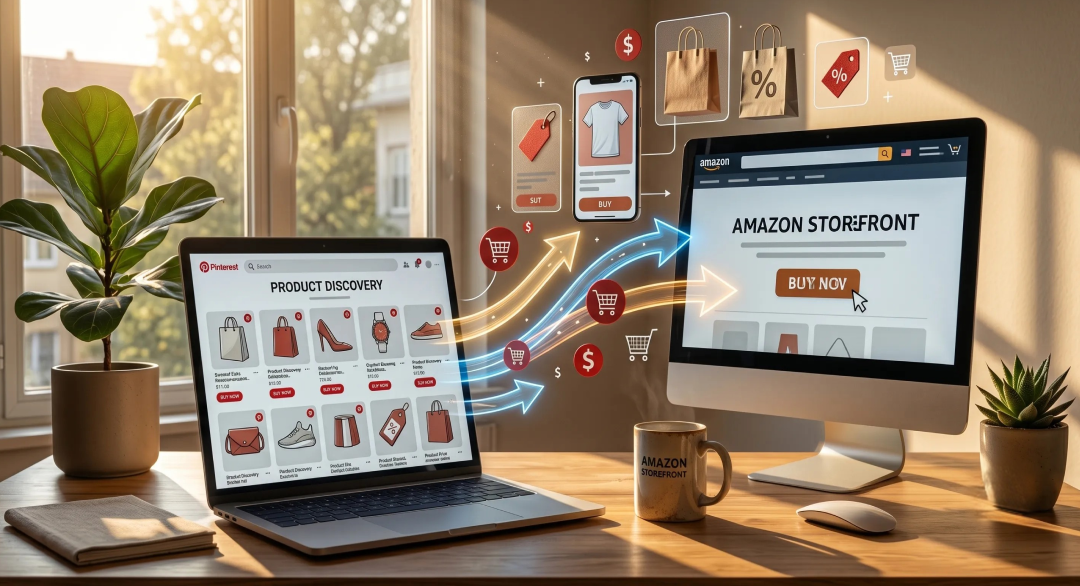
The update allows creators to directly connect their Pinterest profiles to their Amazon Storefronts, add Amazon products to their Pins, and automatically use affiliate links.
At first glance, this may seem like just another feature update. In reality, however, the new integration reflects much deeper changes in the social commerce landscape. Major digital platforms are increasingly embedding affiliate mechanisms into their ecosystems, while content monetization is becoming an integral part of a creator’s business model.
How Amazon Storefront Integration Works on Pinterest
- How Amazon Storefront Integration Works on Pinterest
- Why Pinterest for Affiliate Marketing Is Gaining Popularity
- Long Content Lifespan as an Advantage for Affiliate Traffic
- What Opportunities Does This Create for Creators?
- What Does This Mean for Brands and Advertisers?
- Pinterest for Affiliate Marketing as Part of a Global Trend
- What’s Next?
- Why Pinterest for Affiliate Marketing Is a Positive Signal
Pinterest has introduced the ability for content creators participating in the Amazon Influencer Program to connect their Amazon Storefronts directly to the platform.
Once connected, creators can showcase their Storefront directly on their Pinterest profiles. This allows users not only to view a specific product but also to explore the creator’s entire collection of recommended items.
In addition, Pinterest has added a dedicated Amazon filter to its product-tagging system. This feature enables creators to quickly find relevant products and add them to their Pins without any additional setup.
Another major advantage is the automatic application of affiliate information to tagged products. Essentially, the platform eliminates part of the technical work that previously required extra time when creating affiliate content.
For end users, the entire experience feels seamless and intuitive. They discover a product in a Pin, follow the recommendation, and can complete a purchase in just a few clicks.
Why Pinterest for Affiliate Marketing Is Gaining Popularity
Unlike most social media platforms, Pinterest is not primarily used for entertainment. Instead, it serves as a platform for discovering ideas and planning future purchases.
Users come to Pinterest with specific intentions, such as:
- Finding home renovation and interior design ideas
- Choosing clothing and accessories
- Planning trips and vacations
- Creating gift lists
- Discovering products for their homes
- Comparing products before making a purchase
This places Pinterest much closer to the purchasing decision stage than most other social platforms. For affiliate marketers, it provides access to an audience with strong buying intent. For advertisers, it creates an opportunity to attract higher-quality traffic with the potential for better conversion rates.
Long Content Lifespan as an Advantage for Affiliate Traffic
Another reason why Pinterest for affiliate marketing remains a promising channel is the long lifespan of its content.
On most social media platforms, a post receives the majority of its reach within a few hours or days. After that, its visibility declines significantly. Pinterest operates differently. Pins can continue appearing in search results and recommendations for months or even years after they are published.
This is particularly effective for:
- Product roundups
- Seasonal recommendations
- Home decor and interior design
- Fashion and style content
- DIY projects
- Fitness content
- Travel inspiration
- Gift guides
As a result, a single well-optimized Pin can generate traffic for a much longer period than a standard post on most other social media platforms.
What Opportunities Does This Create for Creators?
The Amazon Storefront integration makes content monetization much easier for creators. Previously, authors had to manage affiliate links manually, add them to descriptions, and ensure that all settings were configured correctly. Now, a significant portion of this process is automated.
As a result, creators can focus on producing high-quality content and curating valuable product recommendations rather than dealing with the technical aspects of affiliate link management. This is especially beneficial for creators working in niches such as:
- Home & Decor
- Fashion
- Beauty
- Fitness
- Parenting
- Food
- Travel
- Seasonal Shopping
These categories have traditionally performed exceptionally well on Pinterest, consistently generating high levels of audience engagement.
What Does This Mean for Brands and Advertisers?
For brands and advertisers, the new functionality opens up an additional channel for promotion through creator commerce, offering:
- New traffic sources
- Additional sales opportunities
- Greater scalability
- A larger pool of content partners
Today’s consumers increasingly trust recommendations from the creators they follow rather than traditional advertising banners. As a result, creator partnerships have become one of the most effective ways to attract and engage customers. When users discover a product within a curated collection they were actively searching for, the recommendation feels far more natural and relevant than conventional advertising. This creates a more seamless shopping experience and can significantly improve engagement and conversion rates.
Pinterest for Affiliate Marketing as Part of a Global Trend
The launch of Amazon Storefront integration on Pinterest is part of a much broader industry trend.
Major technology companies are increasingly embedding affiliate mechanisms directly into their products and ecosystems. Instagram continues to expand its shopping features and creator monetization tools. TikTok is actively promoting TikTok Shop. YouTube is testing new shopping experiences through video content. Meanwhile, Pinterest is strengthening its social commerce capabilities through Amazon Storefront integration.
As a result, affiliate marketing is no longer viewed as a separate marketing channel. Instead, it is gradually becoming a standard component of the digital infrastructure that powers modern social and content platforms.
What’s Next?
Pinterest has already announced plans to expand beyond Amazon Storefront by adding support for additional affiliate platforms in the future. This could become the next major step in the evolution of both creator commerce and affiliate marketing.
The easier it becomes to add products and affiliate recommendations, the more actively creators will incorporate these tools into their content strategies. In turn, this will lead to more high-quality content, new traffic sources, and additional monetization opportunities.
If you work with affiliate programs or run your own content-driven project, the Amazon Storefront integration on Pinterest opens several promising opportunities:
- Creating product collections with a long content lifespan
- Attracting high-intent purchase traffic
- Scaling through Pinterest as a traffic channel
- Expanding creator commerce strategies in the e-commerce space
- Unlocking additional content monetization opportunities
Why Pinterest for Affiliate Marketing Is a Positive Signal
The Amazon Storefront integration demonstrates that Pinterest for affiliate marketing continues to evolve into a fully developed creator commerce platform. The new functionality simplifies the workflow for creators, creates additional opportunities for brands, and introduces new ways to attract customers through affiliate recommendations. Most importantly, this update once again confirms that affiliate marketing is not losing relevance. On the contrary, the world’s largest digital platforms continue to invest in affiliate tools, making them more accessible, efficient, and scalable for all market participants.
We believe that affiliate marketing remains one of the most promising areas for the growth of digital commerce and content monetization in 2026.
Join SalesDoubler and take advantage of powerful affiliate marketing tools, work with experienced industry partners, and discover new opportunities to grow your traffic and revenue.

SalesDoubler.pro content manager