
GEO for Affiliate Marketing. Why AI Search Doesn’t Replace SEO but Makes It Even More Important
Published: 02.07.2026
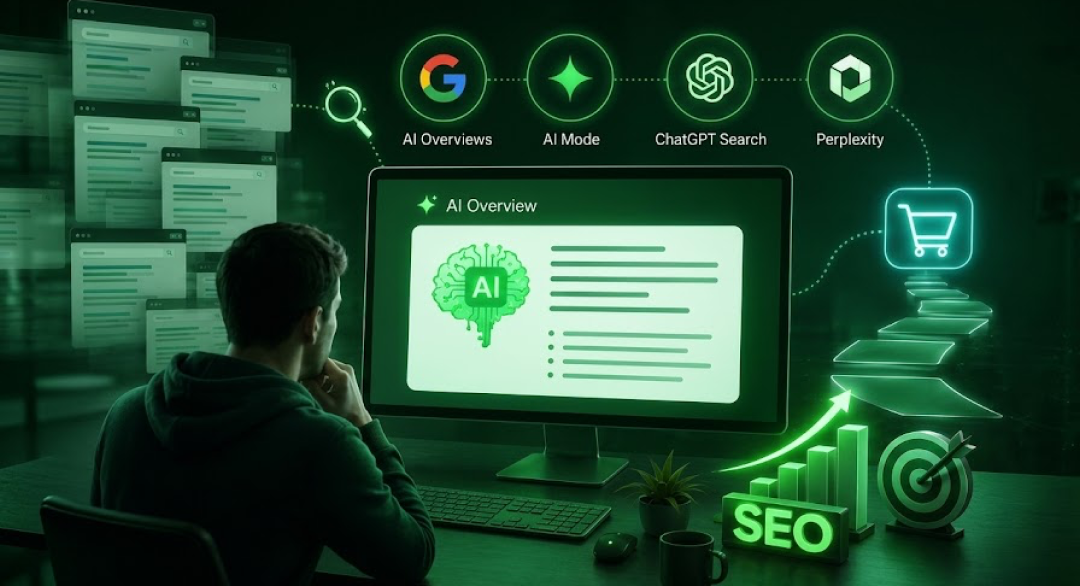
GEO for affiliate marketing is becoming one of the most widely discussed topics in the SEO community. Search results are evolving rapidly. While just a few years ago users would browse dozens of websites to find the information they needed, today they are increasingly receiving ready-made answers generated by artificial intelligence. Google AI Overviews, AI Mode, ChatGPT Search, Perplexity, and other AI-powered search engines are gradually changing the user’s path to purchase.
As a result, a new term is being mentioned more and more often: GEO for affiliate marketing (Generative Engine Optimization). Some experts already consider it the successor to SEO, while others predict a complete transformation of search marketing.
But is the situation really that radical? Not quite. In affiliate marketing, GEO does not replace traditional SEO. On the contrary, the rise of AI search only confirms that high-quality content, expertise, and website trustworthiness are becoming even more important.
What Is GEO for Affiliate Marketing and Why Is Everyone Talking About It?
- What Is GEO for Affiliate Marketing and Why Is Everyone Talking About It?
- How Is GEO Different from SEO?
- Why Quick GEO Hacks Can Do More Harm Than Good
- Why AI Analyzes More Than a Single Keyword
- How to Prepare Your Affiliate Website for AI Search Today
- Why Content Trust Is Becoming a Competitive Advantage
- GEO for Affiliate Marketing is The Next Stage of Search Evolution
Generative Engine Optimization (GEO) is an approach to content creation that helps artificial intelligence systems find, understand, and use information more efficiently when generating answers for users.
For affiliate marketing, this is especially important because most users come looking for advice before making a purchase or signing up for a service. While users previously opened several websites and compared information on their own, AI is now increasingly doing this for them. That is why affiliate content must be as useful, well-structured, and up to date as possible.
Unlike traditional search results, AI does not simply display a list of websites. It analyzes dozens of sources, compares information, summarizes it, and generates a single answer. That is why today it is no longer enough to rank in Google. You also need to create content that AI considers trustworthy and valuable enough to use when generating its responses.
Most affiliate websites are created to help users at the final stage of the decision-making process. This may include product reviews, service comparisons, lists of the best products, financial affiliate programs, or software recommendations. It is exactly this type of content that AI-powered search engines are increasingly using today. However, this certainly does not mean it is time to forget about SEO and start optimizing your website exclusively for artificial intelligence.
How Is GEO Different from SEO?
Although GEO and SEO are often compared, they are not mutually exclusive approaches. Traditional SEO helps search engines discover, index, and rank web pages in search results. Generative Engine Optimization, on the other hand, focuses on ensuring that AI systems can quickly understand a page’s content, evaluate its quality, and use its information when generating responses for users.
In fact, GEO is built on the same principles as modern SEO: high-quality content, a clear structure, up-to-date information, expertise, and trustworthiness. The only difference is that content must now be equally easy for both people and artificial intelligence systems to understand.
That is why GEO should not be viewed as an alternative to SEO today. The best results are achieved by websites that combine both approaches and create content that performs equally well in both traditional search results and AI-powered search.
Why Quick GEO Hacks Can Do More Harm Than Good
Right now, the internet is flooded with advice such as: “Add more FAQs.”, “Break your article into answer blocks.”, “Generate hundreds of pages with AI.”, and “Use more keywords for ChatGPT.”
Sounds familiar? In fact, we saw a very similar situation about twenty years ago, when SEO was just beginning to develop rapidly. Back then, there were also countless “secret techniques” that supposedly guaranteed the top position in Google. Websites were stuffed with keywords, hundreds of nearly identical pages were created, and content was copied from other sources. For a while, these tactics worked—but only until Google learned to detect manipulation. Today, we are witnessing a very similar situation surrounding GEO.
The desire to gain visibility in AI-powered search as quickly as possible is completely understandable. However, this is exactly what can become the biggest mistake. For example, some websites automatically generate dozens of FAQ sections simply because AI often cites answers from them. Others rewrite product descriptions using ChatGPT and publish them as new reviews. Some create hundreds of nearly identical pages with only minor differences between them.
At first glance, this may seem like a logical strategy. However, it raises a simple question: if a user opens such a page after clicking through from an AI-generated answer, will they find any information that was not already included in the AI’s response? If the answer is “no,” then AI is unlikely to have any reason to recommend that page to users. That is why content quality remains the most important factor for success.
The problem is that these methods create content for algorithms rather than for people. If a page does not provide new information, first-hand experience, or genuine value, AI has no reason to use it as a source. That is why superficial GEO optimization rarely works as a long-term strategy.
Why AI Analyzes More Than a Single Keyword
In the past, SEO specialists focused primarily on individual keywords. Today, AI is increasingly using the Query Fan-Out principle (an approach in which a single search query is automatically broken down into several related questions). In other words, AI does not answer only the user’s initial query. It attempts to anticipate all of the follow-up questions as well.
For example, if someone searches for the best loan service, AI simultaneously analyzes questions about pricing, security, terms of use, alternatives, customer support, refunds, setup speed, and many other factors.
That is why a modern article or website should help users make a decision rather than simply answer a single question. The best strategy remains surprisingly simple. To prepare a website for AI-powered search, it is worth creating pages that:
- help users make informed decisions
- answer not only the main question but also related ones
- are regularly updated to reflect changes in the market
- provide transparent information about recommendations and affiliate relationships
- include first-hand experience, examples, or comparisons
- are easy for both people and AI-powered search systems to read and understand
In fact, these are the same principles on which high-quality SEO has been built for many years. The only thing that has changed is the way people search.
At the same time, GEO should not be viewed as a separate discipline that will completely replace SEO. In reality, these approaches work together. SEO helps search engines discover and index a page, while GEO makes it easier for AI services to understand and use that page when generating responses for users. The combination of these two approaches is gradually becoming the new standard for content.
How to Prepare Your Affiliate Website for AI Search Today
If you are just starting to implement GEO for affiliate marketing, don’t rush to completely rebuild your content strategy. It is far more important to review the quality of your existing content and make sure it genuinely helps users make informed decisions.
Start by updating your articles regularly. AI-powered search engines prioritize up-to-date information, especially when it comes to financial products, affiliate offers, pricing, or partnership terms. It is equally important to add your own expertise, such as testing results, real-world examples, service comparisons, or personal insights. This type of content is much more likely to be used as a source for AI-generated answers.
It is also worth paying attention to the structure of your content. Clear headings, a logical section layout, answers to related user questions, and intuitive navigation help not only readers but also AI algorithms find the information they need more quickly.
Most importantly, do not try to optimize your content exclusively for AI. If your content is genuinely useful to people, contains unique information, and addresses real user needs, it will have a much better chance of gaining visibility in both traditional search results and AI-powered search.
Why Content Trust Is Becoming a Competitive Advantage
In the era of AI-powered search, it is no longer enough to simply write an article filled with the right keywords. Search systems are increasingly evaluating how trustworthy a source of information is. That is why factors such as the author’s experience, expertise, factual accuracy, and transparency in recommendations are becoming increasingly important.
For affiliate websites, this means it is no longer enough to simply compare products or services. It is equally important to explain why they were selected in the first place. If a piece of content includes first-hand observations, up-to-date information, real-world examples, or honestly describes both the advantages and disadvantages of affiliate offers, it inspires greater trust among both users and AI-powered search engines.
In the long run, this is exactly the type of content that is more likely to appear not only in Google’s organic search results but also in AI-generated responses. That is why the primary goal of affiliate content is no longer just optimizing for algorithms, but creating information that people, and AI systems can genuinely trust.
GEO for Affiliate Marketing is The Next Stage of Search Evolution
GEO for affiliate marketing is not a new way to outsmart algorithms. It is the next stage in the evolution of search, one that raises the standards for content quality even further. AI can help users find information more quickly, but it still relies on trustworthy sources. That is why websites that create genuinely useful, expert, and up-to-date content have the greatest chance of gaining visibility in both AI-powered search and traditional organic search results.
You do not need to choose between SEO and GEO. A much more effective approach is to combine both strategies and create content that performs equally well for users and modern search systems.
AI-powered search is already changing the rules of the game in affiliate marketing. Read more about the latest trends and tools shaping the future of affiliate marketing on our blog.
Join the SalesDoubler affiliate network to scale your traffic together with trusted partners.

SalesDoubler.pro content manager