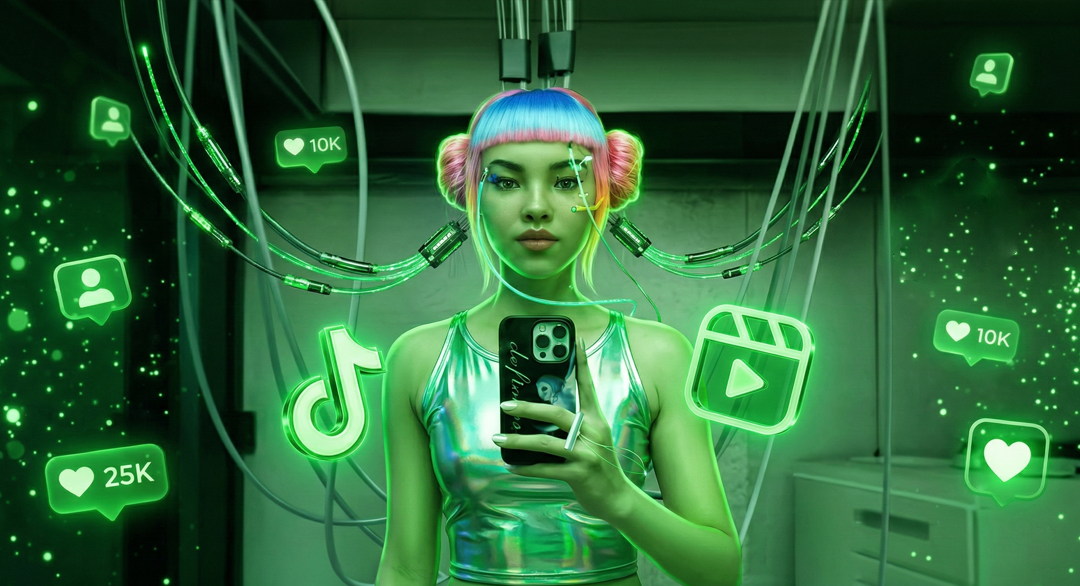
AI Influencers and How They Are Changing TikTok and Reels in 2026
Published: 10.03.2026
AI influencers are no longer an experiment, they have become a full-fledged tool of social commerce. While just a few years ago virtual characters looked like a technological novelty. Today they generate millions of dollars for brands. They shape new approaches to content, and open additional opportunities for affiliate marketing.
In 2026, the key question is no longer whether this tool works, but how to properly integrate it into a performance strategy to achieve stable conversions and predictable revenue.

Who AI Influencers Are and Why They Have Become Part of Marketing
AI influencers are digital characters created using 3D graphics, generative artificial intelligence, and voice synthesis. They run social media accounts, interact with audiences, and promote brands just as convincingly as real bloggers.
The most well-known of them already collaborate with global companies. They gather millions of followers, and generate significant revenue despite not physically existing. This is exactly what turns them from an interesting case into a fool business tool.
Key Market Figures in 2026
Analytics show that the market is scaling rapidly. The share of influencer marketing budgets allocated to virtual characters is growing quickly. The overall size of the industry is approaching tens of billions of dollars.
A significant portion of younger audiences no longer sees a clear difference between a human and a digital influence. A noticeable percentage of users make purchases based on recommendations from artificially created characters. Engagement rates in campaigns featuring such influencers often exceed those of traditional bloggers, which directly impacts conversions and the effectiveness of affiliate traffic.
Why Brands Are Actively Investing in AI Influencers
The main advantage of virtual influencers is the complete control over reputation and communication. A digital character can’t get involved in scandals, break advertising rules, or miss deadlines, while all content is managed by a creative team.
Scalability is another key factor. AI influencers can generate content continuously. They operate in multiple countries and languages at the same time, and host long streams without physical limitations. In the long run, this also means cost optimization, as once the character is created, the need for expensive shoots, travel, and new contracts decreases significantly.
That is why more and more brands are testing or already launching advertising campaigns without the participation of real models and bloggers.
How AI Influencers Drive Sales in TikTok Shop and Reels
The combination of AI influencers and social commerce has become one of the strongest drivers of sales. TikTok Shop is showing explosive growth in turnover, while streaming formats gather billions of views and generate hundreds of millions of dollars in revenue within just a few days during major sales events.
In Asian markets, AI-powered stream hosts are already widely used. They can continuously present products, answer audience questions, and boost sales volume without interruption. Instagram Reels is also strengthening the role of short-form video. Virtual influencers demonstrate engagement levels comparable to those of human bloggers.
Within the affiliate model, this represents a full-fledged source of CPA conversions, where affiliate links perform just as effectively as in traditional influencer marketing.
Transparency and New Platform Rules
As popularity grows, regulation is also becoming stricter. Platforms and regulators increasingly require clear labeling of AI-generated content, disclosure of commercial partnerships, and compliance with rules governing the use of generative technologies.
At the same time, audience trust remains mixed. Some users respond positively to digital characters, while others view them with caution. For affiliate marketing, this means the focus should shift away from mass production of artificial content toward quality, transparency, and real value for the user.
What AI Influencers Mean for Affiliate Marketers in 2026
The emergence of accessible AI tools has significantly lowered the barrier to entry. As a result,affiliates can create their own digital characters, test affiliate programs faster, and scale content without needing a large team.
At the same time, new competition is emerging, as platforms are actively combating low-quality automated content and engagement manipulation. As a result, the affiliate players who succeed are those who build strong brands, earn audience trust, and focus on long-term value rather than simply maximizing traffic volume.
AI influencers sit at the intersection of the key trends shaping the digital market. The rapid growth of social commerce, the popularity of short-form video, the spread of generative artificial intelligence, and the transformation of performance marketing. The global influencer marketing industry continues to expand, while the share of sales generated through social networks increases every year.
Despite technological changes, the fundamental principles remain the same: audience trust, content value, and transparency in commercial relationships. These factors will determine who can consistently earn from the new wave of the AI economy.
Register on the SalesDoubler platform, leverage new technologies, and choose reliable partners.

SalesDoubler.pro content manager